
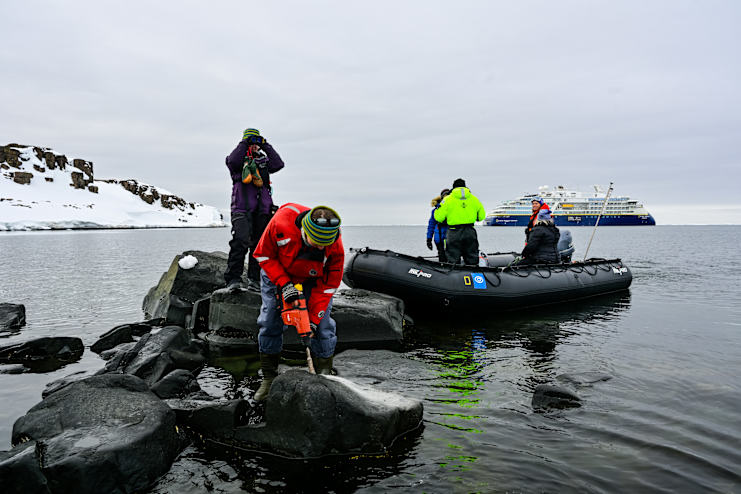
WASHINGTON – 20 May 2026 – The National Geographic Society and Lindblad Expeditions have announced the six Arctic research projects selected for the 2026 Visiting Scientist Program. These projects will be led by National Geographic Explorers and carried out across 11 expedition voyages aboard National Geographic Endurance and National Geographic Resolution. The programme is supported by the Lindblad Expeditions-National Geographic Fund.
Six Arctic Projects Selected for 2026
The selected projects cover a range of Arctic research areas, including microbial diversity, plankton, glacier change, rocky shore biodiversity, polar microbial productivity and microplastics in water and air.
Together, the studies are intended to support scientific understanding of Arctic environments, particularly in regions that are difficult to access through conventional research operations.
The 2026 season marks the fourth consecutive Arctic season in which the Lindblad Expeditions-National Geographic Fund has supported research through the Visiting Scientist Program.
Research to Take Place Aboard Expedition Vessels
The Visiting Scientist Program enables scientists to conduct fieldwork while travelling on National Geographic-Lindblad expedition vessels. In 2026, the Arctic research will take place aboard National Geographic Endurance and National Geographic Resolution across selected voyages.
“The Visiting Scientist Program demonstrates the power of our collaboration with Lindblad Expeditions to support field research and data collection in the world’s most remote environments,” said Ian Miller, chief science and innovation officer at the National Geographic Society. “Through this program, the National Geographic Society and our Explorers are working to document critical ecosystems and create evidence-based solutions to our planet’s most pressing challenges.”
Projects Focus on Microbes, Plankton and Polar Ecosystems
One of the selected projects, Arctic Microbial Diversity as Living Sentinels in a Changing Ocean, is led by National Geographic Explorer Catherine Ribeiro. The project team collected and filtered seawater around Svalbard and along coastal Norway in April 2026. The research focuses on microbial communities, which can provide indicators of environmental change in Arctic marine ecosystems.
Another project, Microbial Gateways of the North Atlantic: Examining Arctic Plankton, is led by National Geographic Explorer Gabrielle Corradino. This study will collect plankton in Iceland and Greenland, with the aim of improving understanding of biodiversity patterns across northern marine environments.
A third project, Primary Productivity Potential of Polar Microbial Communities, is led by National Geographic Explorer Allison Fong. The study will examine microbial productivity in the Svalbard archipelago and assess how these communities are responding to warming ocean conditions.
Glacier Change and Coastal Biodiversity Also Included
National Geographic Explorer Catherine Walker will lead Ice at the Edge: Walls of Change, a project scheduled to begin in July 2026. The project will use geophysical data and imagery to document glaciers in southern Greenland and support wider study of how polar ice systems are changing.
National Geographic Explorer Rui Seabra will lead Long-term Monitoring of Rocky Shore Temperatures and Biodiversity, a project focused on rocky shore habitats across the Atlantic Ocean. The work will add to a monitoring system designed to track biodiversity and temperature conditions in coastal environments.
Microplastics Research to Begin in September
The final selected project, Mapping Microplastics and Microfibers in Water and Air, will be led by National Geographic Explorer Rachael Zoe Miller.
Beginning in September 2026, the project will collect microplastics and microfibres from seawater and air along a route from Greenland to Iceland and Scotland.
Wider Science at Sea Context
The 2026 Arctic projects also align with National Geographic-Lindblad Expeditions’ wider Science at Sea approach, which presents expedition vessels as platforms for field research, conservation activity and guest engagement with scientific work.
The broader programme has supported science projects across global expedition routes, with researchers using voyages to reach remote environments while sharing aspects of their work with travellers on board.
For Lindblad Expeditions and the National Geographic Society, the Visiting Scientist Program forms part of a wider collaboration that brings research activity into expedition travel. In the Arctic, the 2026 projects will give scientists access to field sites across polar and subpolar regions, while also giving guests insight into active research taking place during selected voyages.
By placing scientists aboard ships already travelling through remote Arctic waters, the initiative allows data collection to take place across regions where logistical access can otherwise be limited.
Source: Official announcement by NATIONAL GEOGRAPHIC SOCIETY AND LINDBLAD EXPEDITIONS on 20 May 2026