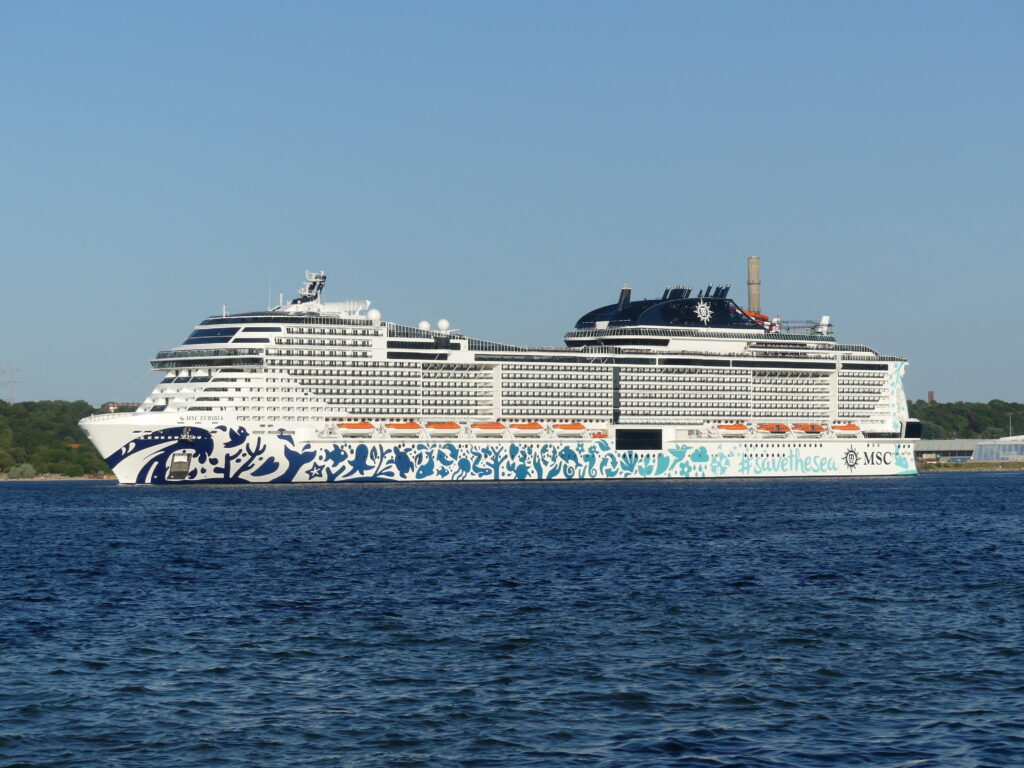
GENEVA, Switzerland – 20 May 2026 – MSC Cruises has become the first cruise line to obtain independent verification and flag state recognition of measured methane emissions for FuelEU Maritime compliance, following certification of MSC World Europa and MSC Euribia in partnership with Bureau Veritas Marine & Offshore.
Industry‑First Verification for FuelEU Maritime
According to the official MSC Cruises press release, the company has become the first cruise line to obtain independent verification and flag state recognition of measured methane emissions for FuelEU Maritime compliance, following certification of MSC World Europa and MSC Euribia in partnership with Bureau Veritas Marine & Offshore.
MSC World Europa recorded an actual methane slip value of 1.67% and MSC Euribia recorded 1.48%, both below the 3.1% default value referenced in FuelEU Maritime Annex II. The verified figures replace the default assumptions previously used for reporting and provide measured data on the performance of dual-fuel LNG engines.
Verification Process
The verification followed measurements carried out in line with IMO Resolution MEPC.402(83) and the FuelEU Maritime guidelines. The campaign included engine-specific methane emissions files, a dedicated methane record book, defined engine load monitoring procedures and onboard exhaust gas measurements using multiple devices.
Bureau Veritas reviewed the onboard documentation, validated the MRV and FuelEU plans and assessed the methane-slip calculation methodology. A Statement of Compliance was then issued, formally recognising the verified results and supporting alignment with EU ETS and FuelEU Maritime requirements.
MSC said the verified data creates a regulatory pathway for operators to move from theoretical emissions estimates to verified reporting based on actual vessel performance. The company noted that this enables more accurate regulatory reporting and supports better-informed regulatory decision-making.
Executive Commentary
Michele Francioni, Chief Energy Transition Officer at MSC Cruises, said: “This certification marks an important step forward in how methane emissions are measured and reported in our industry. By replacing default assumptions with independently verified data based on real-world ship performance, we are strengthening the accuracy and credibility of emissions reporting under FuelEU Maritime. This approach supports informed regulatory decision-making and reinforces the importance of robust measurement as the maritime sector progresses towards net-zero greenhouse gas emissions.”
Paillette Palaiologou, Senior Vice President of East Europe, Mediterranean Sea, Middle East, India and Africa at Bureau Veritas Marine & Offshore, said: “This industry-first verification demonstrates the value of using independently verified operational data to improve the accuracy and transparency of methane emissions reporting. Replacing default assumptions with the verification of actual emissions data enables more effective compliance strategies, helps optimise performance and supports greater confidence in vessel efficiency as the industry advances towards net-zero greenhouse gas emissions.”
Part of MSC’s Long‑Term Decarbonisation Strategy
MSC stated it does not view a single technology as the complete decarbonisation solution and continues to assess performance data across fuels and technologies as part of its long-term energy transition strategy. The company added that it remains invested in advanced technologies, operational improvements and renewable fuels while working towards the maritime sector’s net-zero greenhouse gas target for 2050.
Source: Official announcement by MSC Cruises on 20 May, 2026