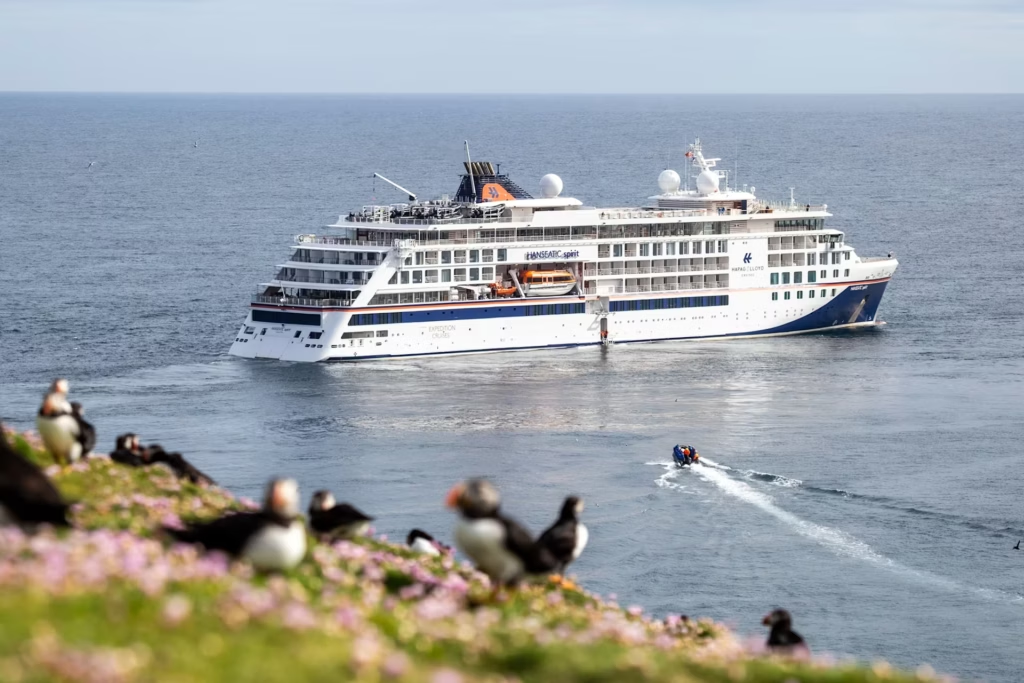

LONDON, 1 October 2026: HX Expeditions has concluded its 2026 Arctic season with 26,491 citizen-science contributions across nine research programmes, alongside 363 science boat sessions and an AI-assisted whale-detection trial aboard MS Fram.
The 31-sailing season delivered what HX Expeditions described as its largest-ever Arctic science data collection. Guests and expedition teams recorded observations covering wildlife, ocean clarity, cloud conditions and aurora activity, while beach clean-ups collected 308.44 kilograms of waste.
The expedition cruise line also reported its highest-ever suite bookings during the season and an average Tripadvisor rating of 4.7 out of five from 167 reviews.
HX Expeditions is marking its 130th anniversary in 2026, tracing its Arctic operations to its first Svalbard voyage in 1896.
Citizen science reaches new seasonal high
The 26,491 contributions included 23,518 iNaturalist observations, 1,286 ORCA records, 1,183 eBird submissions, 203 NASA GLOBE Cloud Observer reports and 181 Secchi Disk readings.
A further 73 Happywhale contributions, 38 harmful algal bloom observations, eight Aurorasaurus reports and one Marine Debris Tracker entry formed part of the total. Guests participate in at least two citizen-science projects on each HX Expeditions voyage. During the 2026 Arctic programme, 363 dedicated science boat sessions connected participants directly with research activity in the field.
AI whale-detection trial runs aboard MS Fram
The season also included the AI WAVE project, or Whales and Arctic Vessels, developed in collaboration with Heriot-Watt University and marine-monitoring specialist Seiche.
A Smart Visual Detection System was deployed aboard MS Fram in what HX Expeditions described as a world-first Arctic trial using thermal imaging and artificial intelligence for real-time whale detection. The trial began during MS Fram’s voyage from Dover to Svalbard and continued around the archipelago throughout the Arctic summer. The system combines thermal cameras, high-definition imagery, machine learning and continuous monitoring to identify whale blows and surface activity.
Data collected through the project will contribute to the development of AI-assisted species identification and automated alert systems. The technology is intended to provide bridge teams with earlier warning of whales, with the potential to reduce disturbance and collision risks involving Arctic species including narwhal, beluga and bowhead whales.
Arctic learning programme expands
HX Expeditions also continued its guest education programme through a free Svalbard course developed with the University of Tasmania.
The pre-travel course covers the archipelago’s wildlife, ecosystems, history and principles of responsible exploration. It follows existing learning programmes focused on Alaska and Antarctica, with further courses planned for Arctic Canada, Greenland, Iceland and the Northwest Passage in 2027.
Greenland Promise extended through 2028
Alongside its Arctic season results, HX Expeditions has extended its Greenland Promise through the end of the 2028 season.
The programme provides additional options if HX Expeditions cancels a qualifying Greenland sailing or if a guest’s government advises against travel. Eligible guests can transfer to another HX Expeditions voyage and receive an additional 20% Future Cruise Credit, or choose a full refund, subject to the programme’s terms and conditions.
The extension adds 2028 departures to protection already offered for 2026 and 2027 voyages. Further details are expected to be added to the HX Expeditions website in the coming weeks.
Dr Verena Meraldi, HX Chief Scientist, said:
“Science is one of the most powerful ways to turn an Arctic journey into something that matters long after guests return home. From 26,491 citizen science submissions to a world-first Arctic trial using AI and thermal imaging to detect whales, this season shows what becomes possible when operators, research and educational bodies, technology partners and guests truly work together. It’s travelling with a purpose. As the region’s largest expedition cruise operator, we have a responsibility to pair our scale and years of experience with meaningful participation to create a deeper understanding of how we can protect the Arctic of the future.”
The 2026 Arctic programme combined citizen science, research partnerships, guest education and technology trials across HX Expeditions’ 31 sailings.
Source: This article is based on HX Expeditions’ official press release issued on 01 October 2026, London.